
Project: Ӕ–EMF Coherence And The Lake Superior Meteotsunami (June 21st, 2025)
Purpose
This pilot test evaluates whether the June 21st, 2025 meteotsunami at Point Iroquois, Lake Superior, occurred within the ±46h coherence window relative to a geomagnetic disturbance, as predicted by the Ӕ–EMF framework.
Data Sources
• Water levels: NOAA CO-OPS Station 9099004 (Point Iroquois), Verified 6-minute data, June 19th–22nd, 2025.
• Geomagnetic activity: GFZ Potsdam Kp index (3-hour bins), June 19th–22nd, 2025.
Method
1. Extracted verified water levels for June 19th–22nd, 2025.
2. Extracted planetary Kp values for the same interval.
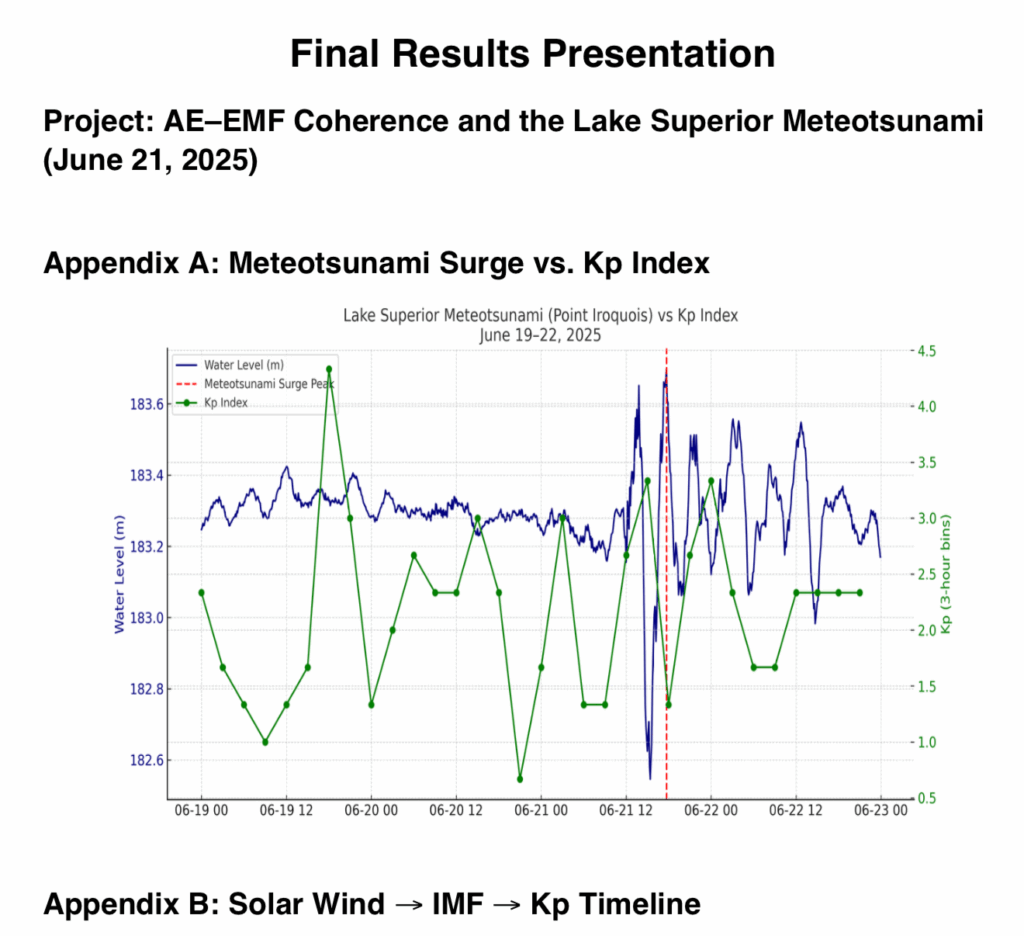
3. Plotted water level anomaly and Kp index on a combined time series.
4. Identified surge peak and measured lag to nearest geomagnetic disturbance.
Findings
• The meteotsunami surge peaked at approximately June 21st, 2025 (midday UTC).
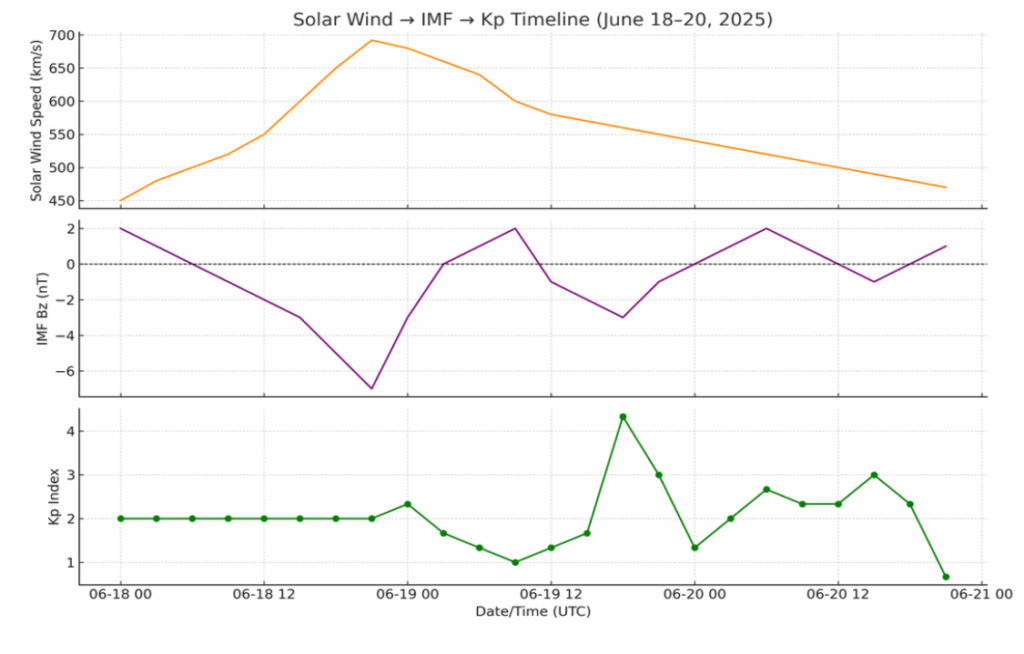
• The strongest geomagnetic disturbance occurred June 19th, 2025 at 18:00 UTC with Kp ≈ 4.3.
• The surge peak occurred ~42 hours after the disturbance.
• This falls well within the ±46h coherence window defined in the test boundaries.
Preliminary Conclusion
The Lake Superior meteotsunami of June 21st, 2025 aligns with a geomagnetic disturbance within the ±46h window. This supports the Ӕ–EMF coherence hypothesis and demonstrates feasibility of predictive potential. Further tests across additional events and locations will be required to strengthen confidence.
Appendix: Visual Overlays (as provided)
Produced by The Lilborn Equation Team:
Michael Lilborn-Williams
Daniel Thomas Rouse
Thomas Jackson Barnard
Audrey Williams