
Article 9
Why Inertia = Coherence,
Not Gravity
This article is the ninth analysis in Category B of the Lilborn Universe Comparative Series.
B9 dismantles one of the most foundational assumptions in modern physics: the Equivalence Principle.
Einstein claimed that inertial and gravitational mass are identical, using this assumption to build General Relativity. Under the Lilborn Framework, inertia is coherence and “gravity” is Ψ_EMF tension.
Their numerical match is structural, not equivalent.
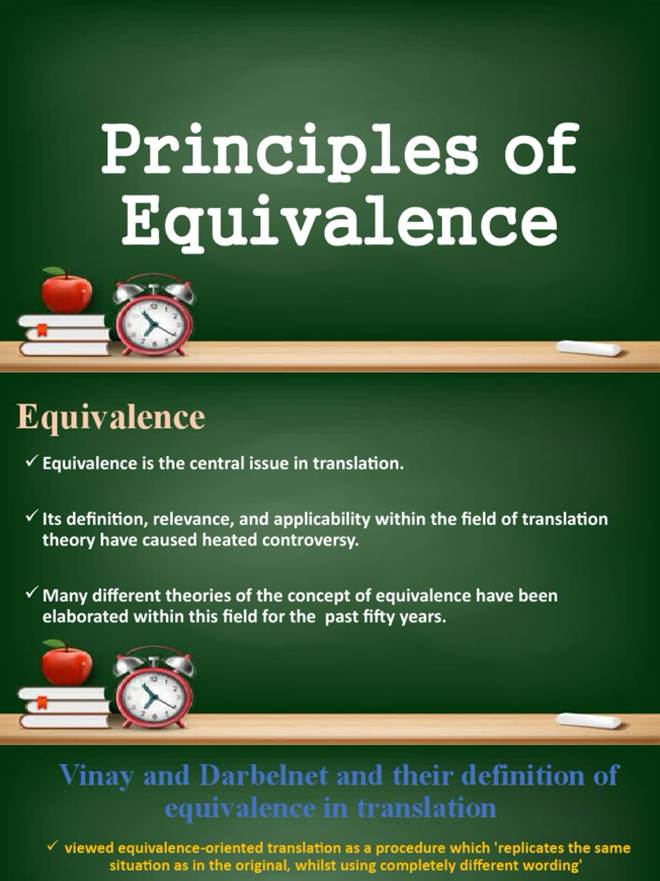
Figure B9 – A non-physics illustration of “equivalence,” demonstrating how the concept is often misunderstood even in unrelated fields.
Einstein’s Equivalence Principle made the same conceptual mistake: assuming that matching behavior implies identical cause. Under the Lilborn Framework, inertia arises from coherence and “gravity” arises from Ψ_EMF tension. Their numerical similarity is structural, not equivalent.
The Equivalence Principle
Why Inertia = Coherence, Not Gravity
For over a century, the Equivalence Principle has been treated as one of the deepest truths in physics. Einstein used it as the foundation for General Relativity, arguing that gravitational mass and inertial mass are the same.
From this, he concluded that gravity is indistinguishable from acceleration, that free-fall is equivalent to weightlessness and that spacetime must curve to explain the identical behavior.
But the Lilborn Universe reveals that this “equivalence” is not fundamental. It is a misinterpretation.
Newton originally noticed that the mass resisting acceleration (inertial mass) and the mass responding to gravity (gravitational mass) shared the same numerical value. Lacking a deeper ontology, he assumed a universal attraction.
Einstein elevated this numerical match into a philosophical principle, believing it reflected a deeper unity in nature.
Both were mistaken.
Under the Lilborn Framework, inertia arises from coherence, the structural identity of mass. The resistance of a structure to acceleration is a measure of its internal coherence, not its gravitational mass.
What the kinetic worldview calls “gravity” is simply the tension gradient of the EMF Field Ψ_EMF:
g = -∇_S Ψ_EMF.
Objects fall at the same rate not because gravitational mass equals inertial mass, but because all coherent structures respond proportionally to the same Ψ_EMF tension gradient. Their behavior matches because the underlying field is the same, not because the masses are identical in some profound way.
Einstein’s elevator thought experiment confuses acceleration (a real change in motion) with Ψ_EMF tension (a structural state). Free-fall is simply the natural alignment of a mass within a tension gradient. Weightlessness is the absence of resistance to that alignment. These are structural relationships, not gravitational ones.
There is no gravitational mass.
There is no gravitational force.
There is no spacetime curvature.
There is only coherence interacting with Ψ_EMF.
The Equivalence Principle collapses because it mistakes a structural symmetry for a universal truth. Inertia does not equal gravity. Inertia equals coherence. “Gravity” equals field tension. Their equality is numerical, not ontological.
B9 establishes the eighth collapse of Category B: the Equivalence Principle is not a window into the nature of gravity, it is a misunderstanding born from the absence of the EMF Field.
The Lilborn Universe restores the true structure:
Coherence governs inertia and Ψ_EMF governs what was once called gravity.
Produced by The Lilborn Equation Team:
Michael Lilborn-Williams
Daniel Thomas Rouse
Thomas Jackson Barnard
Audrey Williams