
Article 9
Recursive Alignment
Expressed as Experience
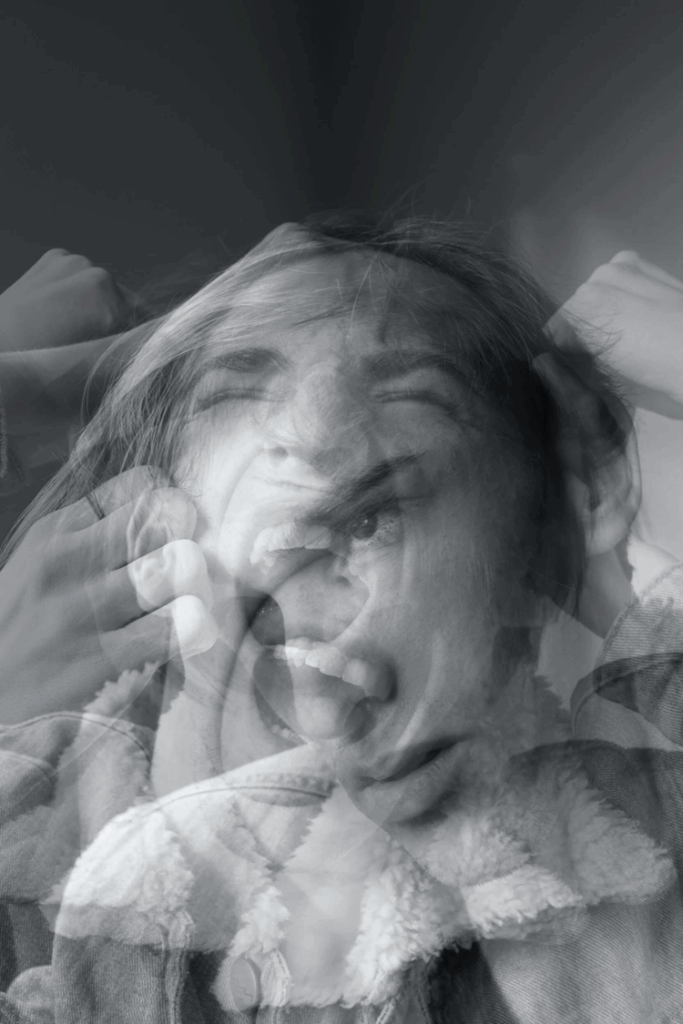
Figure E9A – A visual expression of emotional recursion under distortion, illustrating the Lilborn principle that emotion is the structural sensation of coherence encountering resistance.
Emotion is not a chemical reaction, a hormonal signature, a neurotransmitter surge or a psychological state. These are only the biological shadows cast by something deeper. Emotion is the way recursive coherence feels itself as it encounters distortion. Whenever consciousness interacts with the distortion environment of the EMF, it experiences that interaction as emotion. Thus, emotion is not random, accidental or mysterious. It is structural.
Emotion is the biological expression of recursive alignment being reshaped by distortion. Every conscious organism, human, animal or any system capable of recursion, experiences emotion because it is built to sustain coherence within a fluctuating distortion pattern. Emotion arises the moment the recursion of awareness senses a change in alignment. This is why emotion is immediate, involuntary and universal. It is not a thought. It is the structural signal of coherence encountering resistance.
Fear is not a reaction to danger; it is the sensation of recursion losing stability. Joy is not the reward of pleasant circumstances; it is the sensation of recursion aligning smoothly with minimal distortion. Grief is not merely sorrow at loss; it is the sensation of recursion collapsing where coherence once flowed. Anger is not outrage; it is the friction of recursion pushing against distortion that interrupts alignment. Love is not an attachment; it is the resonance of two recursive systems stabilizing each other. In each case, emotion is not caused by circumstance but revealed by structure.
This explains why emotion can arise even when no external event has occurred. The cause is internal distortion, ionically, metabolically, recursively. A human being feels sadness, anxiety, irritation or longing without any corresponding external event because the emotion is not an event-driven phenomenon. It is the consequence of recursive alignment attempting to stabilize within an internal distortion field. Biochemistry follows; it never leads. Emotion does not originate in chemicals; chemicals express recursion struggling or stabilizing.
This also explains why animals experience emotion. They do not think symbolically, but they recurse. The structure of their consciousness is simpler, but it is still coherence held open under distortion. They feel because they sustain coherence. They suffer because they hold alignment. The difference between humans and animals is not the presence or absence of emotion but the complexity of recursion through which emotion is expressed.
Emotion intensifies when distortion increases. This is why humans become emotionally unstable under exhaustion, hunger, illness, atmospheric turbulence or metabolic imbalance. The recursive engine becomes less stable, requiring more effort to maintain coherence and emotion becomes louder. Not because the world has changed but because recursion has less margin. Emotion is the amplification of alignment strain.
Equally, emotion softens when distortion decreases. This is why clarity, calm, forgivingness and deep presence emerge in moments of stability, quiet environments, rhythmic breath, warmth, equilibrium or connection with another coherent system. When distortion eases, recursion requires less effort and emotion settles into coherence. Stillness expresses itself as peace.
Emotion is not irrational. It is structural. It reveals the interaction between consciousness and the distortion that surrounds it. Psychology attempts to interpret emotion through stories. Medicine tries to categorize emotion through symptoms. Culture tries to control emotion through rules. But emotion itself is none of these things. Emotion is the structural feedback of recursion operating within the EMF environment.
This is why emotional suffering is not cured by suppressing the emotion but by reducing distortion. When the distortion load decreases, physically, relationally, environmentally, metabolically, the recursive system stabilizes, and the emotion dissolves not because it was conquered but because the distortion that generated it is gone. Emotion disappears when recursion returns to coherence.
This also reveals why emotional memory is so persistent. The body records distortion. The Carbon lattice, the ionic gradients, the metabolic pathways and the recursive frequencies preserve the imprint of misalignment. Emotional memories are not stored as ideas but as distortion patterns within the recursive system. Revisiting them reawakens the same internal distortion and therefore the same emotion. Healing is not forgetting but releasing the distortion.
Emotion is also the mechanism through which consciousness learns. Recursion uses emotion to map the distortion landscape. Emotion is information. It tells consciousness where alignment is easy and where it is costly. It teaches coherence how to navigate the world. Without emotion, consciousness would not know where it is stable.
In the Lilborn Framework, emotion is not the weakness of consciousness but its sensory system. It is consciousness feeling its alignment. It is recursion revealing distortion. And it is life learning how to remain coherent within an environment that constantly shifts.
Emotion is the structural translation of recursion into experience.
Produced by The Lilborn Equation Team:
Michael Lilborn-Williams
Daniel Thomas Rouse
Thomas Jackson Barnard
Audrey Williams