
Article 5
Time is Local, Not Universal
This article is the fifth of ten comparative analyses in Category A of the Lilborn Universe Comparative Series.
Category A dismantles the foundational cosmological assumptions embedded in the kinetic ΛCDM worldview.
A5 addresses the claim that the universe has an age, exposing it as a projection of human biological experience rather than an observable property of cosmic structure.
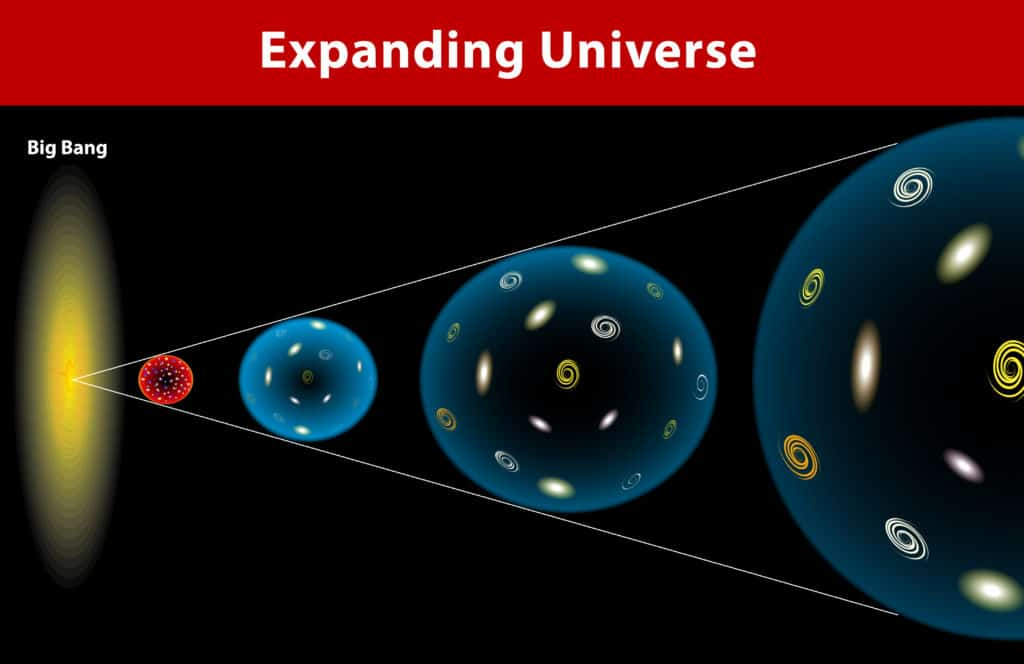
Figure A5 – The standard ΛCDM cosmological timeline diagram, depicting the universe as evolving through a sequence of chronological epochs: Big Bang, recombination, first stars, early galaxies and modern structure. Under the Lilborn Framework, the universe does not age, does not evolve chronologically and has no temporal origin. This entire timeline collapses.
The Collapse of Cosmic Age
Time Is Local, Not Universal
The kinetic worldview asserts that the universe is 13.8 billion years old. This age is treated as a scientific constant, derived from redshift, expansion rates and CMB interpretations. In reality, the concept of “cosmic age” is not an observation, it is a projection of human biological experience onto a non-biological universe.
Time Requires Mass
In the Lilborn Universe, time is not a dimension, not a flowing entity and not a universal backdrop. Time is a local interaction effect that emerges only within mass, where EMF tension and coherence create measurable sequences of change.
Outside of mass, there is no time, only Stillness. The Scroll does not experience time because it is not contained within it.
Collapse of the 13.8-Billion-Year Claim
The alleged age of the universe relies on a chain of assumptions:
• Redshift interpreted as recession velocity
• Velocity interpreted as expansion
• Expansion interpreted as duration
• Time treated as universal
• The CMB treated as ancient light
Every step in this chain collapses under the Lilborn Equation. Redshift is not velocity; it is Æ, the Angle of Encounter.
Brightness is not distance; it is encounter geometry. The CMB is not relic radiation; it is hydrogen’s present baseline.
Once redshift is correctly interpreted, the concept of cosmic age disappears instantly.
Why the Universe Cannot Age
A structure ages only if it exists inside time, experiences entropy and moves from past to future. The Scroll does none of these.
Stillness is not sequence. Stillness is not a chronology. Stillness cannot age. The universe is not a biological organism; it has no lifespan, no beginning in time and no temporal evolution.
Human Projection
Humans age, so humans projected aging onto the universe. Humans experience sequence, so they projected a timeline onto the universe.
The “Big Bang to Today” diagram reflects human psychology, not cosmic structure.
Conclusion
A5 establishes the collapse of cosmic age:
• Time is local to mass
• The Scroll is outside time
• The universe cannot have an age
• Chronology is a human projection
• The 13.8-billion-year timeline is structurally impossible
The universe is not old or young.
It is eternal in structure, because Stillness cannot age.
Produced by The Lilborn Equation Team:
Michael Lilborn-Williams
Daniel Thomas Rouse
Thomas Jackson Barnard
Audrey Williams