
How France Gave The World A Hypothesis That Was Never Proven
In the 1670s, a magnificent stone structure rose on the outskirts of Paris.
Commissioned by King Louis XIV and planned with scientific precision, the Paris Observatory was built to do something Europe had never seen before: measure the heavens with the newest inventions of the age, telescopes and mechanical clocks.
It would become the center of timekeeping, navigation, planetary motion and national pride.
The observatory’s meridian line split the grounds precisely north and south. From this axis, astronomers would align their telescopes to the stars, but also to power. France was entering the scientific age not as a student, but as a leader. And the Paris Observatory would become the pulpit.
In 1669, Giovanni Domenico Cassini, already a respected astronomer in Italy, was invited by the French crown to oversee the new observatory’s operations. By 1671, he was in Paris directing research that included mapping the Moon, refining planetary tables, discovering moons of Saturn and measuring the parallax of Mars. But what Cassini would become known for was not what he discovered but what he had the integrity to walk away from.
For centuries, astronomers told time by sun and shadow.
But now, with the pendulum clock and telescope working in tandem, something unprecedented became possible: timing the eclipses of Jupiter’s moons to the second.
Cassini brought to Paris a young Danish assistant named Ole Rømer. Together, they observed that the inner moon, Io, sometimes disappeared behind Jupiter too early or too late. The discrepancy reached as much as twenty-two minutes. And in August of 1676, Cassini stood before the Royal Academy of Sciences and offered a daring explanation.
He proposed that the delay might be caused by light itself, not arriving instantly, but traveling from Jupiter to Earth over time. The idea stunned and thrilled the court.
France had, in its own observatory, offered the world something it had never known: the speed of light.
But the story did not end there.
Cassini and Rømer continued their observations, turning to Jupiter’s other moons: Europa, Ganymede and Callisto.
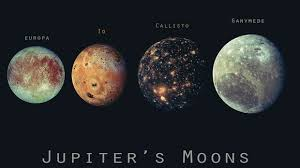
Image courtesy of Solar System Blog; Author Aaron Molotsky
And what they found troubled the clarity of their earlier conclusion. These moons did not show the same consistent delay. In some cases, the timing didn’t change at all. Cassini, whose reputation rested on accuracy, refused to treat one anomaly as a universal law. If light’s delay was real, it had to apply to all of Jupiter’s moons. It did not.
Quietly, and without fanfare, Cassini withdrew his support for the hypothesis. He revised his eclipse tables, not with a universal correction, but with moon-specific adjustments. The announcement that had shaken the court was never formally recanted but it was no longer pursued. And so the speed of light, as it was first declared, was left hanging in history, applauded but unconfirmed.
Today, few remember that it was Cassini, not Rømer, who stood before the Academy and declared that light travels with delay. Fewer still recall that he later abandoned the idea when the data failed to support it. The speed of light was born in the theater of the observatory, and it has carried something theatrical ever since. Modern voices still proclaim it with fanfare, as if the declaration itself made it true. But the man who made that first declaration is also the man who said, stop. This does not work for the others.
In the Lilborn Framework, Cassini is remembered not for proving the speed of light, but for refusing to pretend. He gave the idea a platform. And when the structure collapsed, he stepped away. In a time of spectacle and applause, he chose accuracy over affirmation. He did not deny light. He denied the illusion of its motion.
Produced by The Lilborn Equation Team:
Michael Lilborn-Williams
Daniel Thomas Rouse
Thomas Jackson Barnard
Audrey Williams